
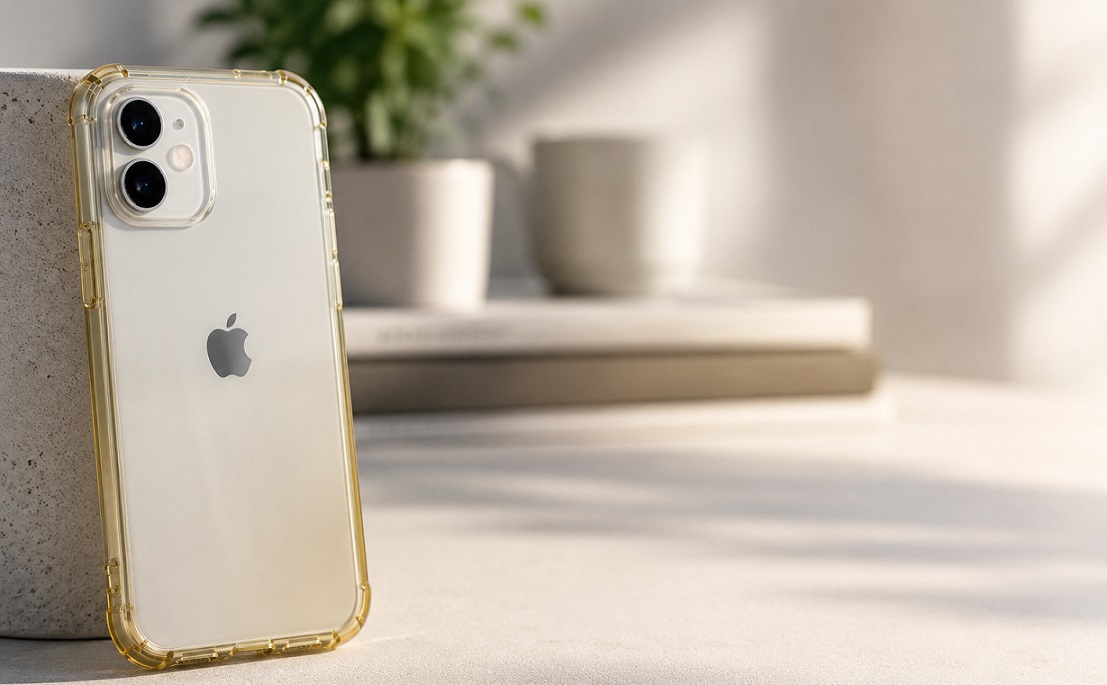
A clear phone case often looks completely transparent when it is new. You can see the colour of your phone, the case looks discreet, and it does not hide the design.
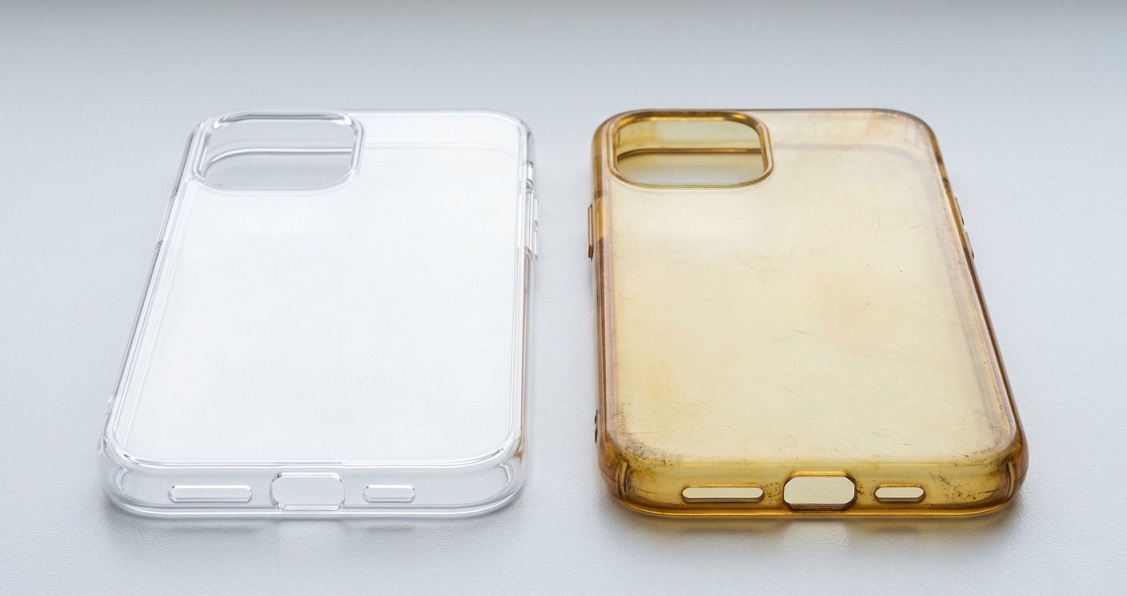
After a few months, the same case may develop a yellowish tint. First along the edges, then around the buttons, and eventually across larger areas of the back.
That does not necessarily mean the case is dirty. A clear phone case can turn yellow because of a combination of its material, light, heat, skin oils, sweat, and everyday use.
This is where a common misunderstanding comes in: dirt on the surface can often be removed, but yellowing within the material itself usually cannot be washed away.
This is especially true of flexible clear cases, which are often made from TPU. They are practical and shock-absorbing, but the material reacts to its surroundings over time.
In short: Clear phone cases turn yellow because transparent plastic materials are affected by UV light, heat, oxygen, skin oils, sweat, and everyday chemicals. Mild surface discolouration can often be reduced with gentle cleaning, but deep yellowing within the material is usually permanent. If the case becomes stiff, severely yellowed, or no longer fits snugly, it should be replaced.
Why do clear phone cases turn yellow?
A clear phone case turns yellow because the material gradually changes when exposed to light, air, heat, and contact with skin. The process happens slowly, so you may not notice it until you compare your case with a new one.
Flexible clear cases are generally more susceptible than hard, transparent plastic cases. Soft materials are designed to bend, fit snugly, and absorb shocks, but they can also be more sensitive to environmental factors.
The key distinction is between surface dirt and changes within the material. Dirt sits on top of the case and can often be washed off. Yellowing within the plastic, however, is a chemical or physical change that usually cannot be fully reversed.
That is why two cases made for the same phone model may age differently. A case frequently exposed to sunlight, warm pockets, hand cream, sweat, or cleaning products may turn yellow faster than one used under gentler conditions.
TPU and the material behind a clear phone case
Many clear phone cases are made from TPU, which stands for thermoplastic polyurethane. This flexible plastic is used because it can absorb impacts, bend slightly, and still fit snugly around a phone.
TPU is popular for transparent cases because it combines clarity with practical protection. However, the same flexibility that makes the material convenient for everyday use can also make it more sensitive to light, heat, and chemical residues.
As TPU ages, the material can oxidise. This means it reacts with oxygen and other environmental influences. The result may be a yellow or brownish tint, particularly in areas that are touched frequently or receive the most light.
Harder transparent plastics can also become scratched, cloudy, or discoloured, but yellowing is particularly common in flexible clear cases. That is why a clear case for an iPhone, Samsung, or another phone can change in appearance even while it still fits and provides protection.
The yellow tint often starts around the edges and corners because these areas are touched most frequently and are exposed to friction from hands, pockets, bags, and surfaces.
UV light, heat, and everyday exposure
UV light is one of the common reasons why a clear phone case turns yellow. Sunlight can change the colour of transparent plastics over time. This does not happen only in direct summer sunlight, but also when a phone is frequently left on a windowsill, in a car, or on a table that receives plenty of daylight.
Heat can make the problem worse. A phone can become warm during charging, navigation, gaming, or video recording. If the case also fits closely and traps heat, the material may age faster.
Skin oils, sweat, and cosmetics also play a role. Hands naturally leave oils, salt, and small residues on a case. Hand cream, sunscreen, makeup, and cleaning products can settle on the surface and gradually create a more yellow or dull appearance.
Yellowing is therefore rarely caused by just one factor. In practice, it is the combined effect of daily use: sunlight, warm pockets, moisture, oils, and small amounts of chemical residue.
| Factor | What happens in practice? | Can it be avoided completely? |
|---|---|---|
| UV light | Can change the colour of transparent plastics over time. | No, but exposure to direct sunlight can be limited. |
| Heat | Can accelerate ageing and discolouration. | Partly, especially by avoiding hot cars and prolonged overheating. |
| Skin oils and sweat | Can leave deposits and cause discolouration on frequently touched areas. | No, but regular wiping helps. |
| Creams and chemicals | Can react with the surface or leave yellowish residues. | Often, if the case is wiped after contact. |
Dirt or permanent yellowing?
Before trying to restore a yellowed case, it is worth checking whether the colour is on the surface or within the material itself. This determines whether cleaning will make a real difference.
Surface dirt often feels slightly greasy, dull, or uneven. It can build up around the camera opening, buttons, and edges, where fingers frequently make contact. If the case becomes noticeably clearer after a gentle wash, the main problem was dirt.
Permanent yellowing looks more uniform and does not disappear even when the case is clean and dry. You can also check by removing the case and holding it against a sheet of white paper. If the entire material has a yellow tint, the plastic has probably aged.
A simple rule of thumb: If the case still looks yellow after gentle cleaning and drying, the discolouration probably cannot be washed away.
Avoid abrasive cleaners, strong solvents, and harsh cleaning products. They can make the case cloudy, weaken the material, or leave an uneven surface without removing deep yellowing.
How to clean a clear phone case
Cleaning cannot always make an old yellowed case clear again, but it can remove grease, dust, and deposits that make the discolouration look worse. The method should be gentle, especially if the case is flexible.
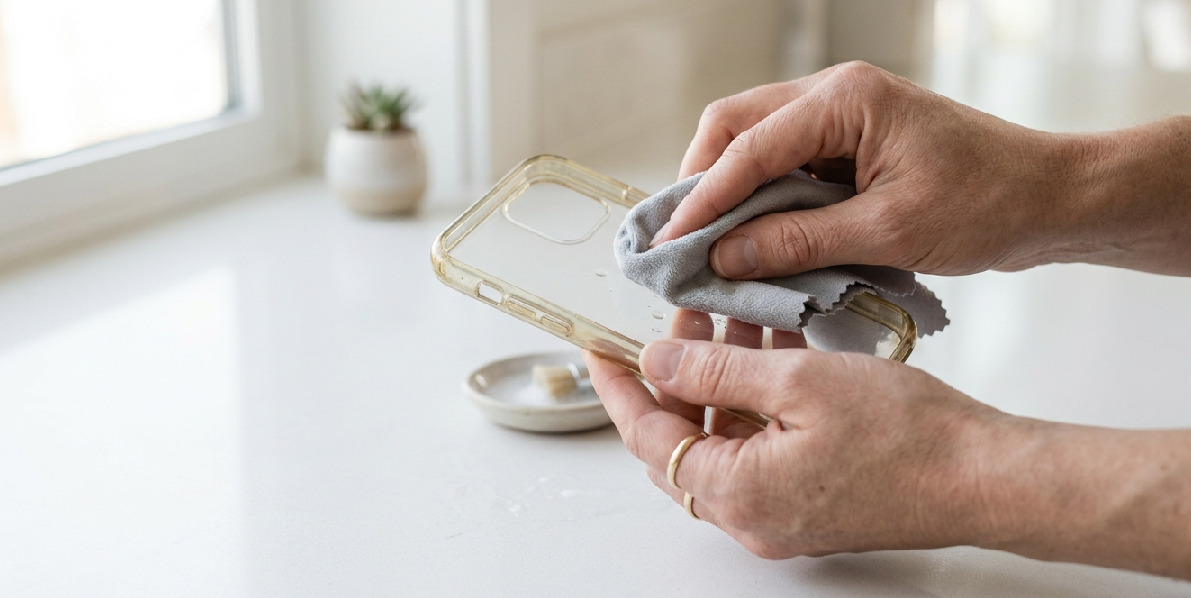
Always start by removing the case from your phone. Do not thoroughly clean the case while it is still attached, as moisture can collect around the buttons, ports, and camera module.
- Rinse the case in lukewarm water.
- Use a small amount of mild dishwashing liquid.
- Clean gently with your fingers or a very soft cloth.
- Pay extra attention to the edges, corners, and areas around the buttons.
- Rinse away all soap residue.
- Dry the case thoroughly with a soft, lint-free cloth.
- Let the case air-dry completely before putting it back on your phone.
If dirt is stuck in the corners, you can use a soft toothbrush very carefully. Do not press hard, as small scratches can make the case appear cloudier and allow dirt to accumulate more easily in the future.
Do not use bleach as a standard solution. It may be tempting when the case has turned yellow, but strong products can alter the surface, make the plastic more brittle, or leave uneven patches.
How to reduce yellowing
You cannot stop a clear phone case from ageing, but you can slow down the process. The main goal is to reduce exposure to factors that accelerate discolouration.
The most practical habit is to wipe the case regularly. It does not need to be a major task. A soft cloth can remove skin oils and residues before they build up. This is especially useful if you often use hand cream, sunscreen, or makeup.
- Avoid leaving your phone in direct sunlight for long periods.
- Keep your phone away from very hot environments, such as a parked car.
- Wipe the case if it has come into contact with sunscreen, hand cream, or makeup.
- Clean the case gently at regular intervals instead of waiting until it looks dirty.
- Avoid harsh cleaning products, perfume, and solvents on the case.
- Allow the case to dry completely after cleaning before putting it back on your phone.
Where you keep your phone also matters. A phone frequently left on a windowsill, on a car dashboard, or near heat sources is exposed to more stress than necessary.
A phone case is designed to be used, not treated as something fragile. Still, small habits can make the difference between a case that quickly develops a noticeable yellow tint and one that stays looking good for longer.
When should you replace your case?
A yellowed case is not necessarily unusable. If it still fits snugly, protects the buttons and corners, and has no cracks, it can continue to provide physical protection. The issue may be purely cosmetic.
However, there are situations when replacing the case makes sense. Yellowing can occur alongside other signs of ageing, especially if the material has been exposed to heat and UV light for a long time.
- The case has become stiff, brittle, or cracked around the corners.
- It fits more loosely than before and may slip off the phone.
- The buttons are harder to press because the material has changed shape.
- The edges are deformed or lift away from the sides of the screen.
- The raised camera edge or corner protection has worn down.
- The yellowing is so severe that the phone always looks dirty, even after cleaning.
Protection comes before appearance. If the case no longer fits correctly, it is more than a cosmetic issue. A loose or brittle case may provide less protection if the phone is dropped.
If you prefer a transparent look but your current case has become permanently yellow, replacing it is often more realistic than trying to clean it repeatedly. Use cleaning to remove surface dirt, not as a solution for aged plastic.
FAQ – frequently asked questions about clear phone cases turning yellow
-
Why does my clear phone case turn yellow?
It is usually caused by a combination of the material type, UV light, heat, oxygen, skin oils, sweat, and everyday chemical residues. The process happens gradually and is often part of the material's natural ageing. -
Can you make a yellowed phone case clear again?
If the yellowing is mainly caused by surface dirt, gentle cleaning may help. If the material itself has turned yellow, it usually cannot be restored to complete clarity. -
Do all clear phone cases turn yellow?
Many transparent cases can turn yellow over time, especially flexible TPU cases. How quickly this happens depends on the material quality, use, heat, sunlight, and contact with skin oils or chemicals. -
Is a yellowed phone case harmful to the phone?
No, the colour itself is generally not harmful to the phone. However, if the case has also become stiff, loose, cracked, or deformed, it may offer less protection. -
Does washing the case frequently help?
Regular gentle cleaning can remove oils, dirt, and residues that contribute to discolouration. However, it cannot completely stop the material's natural ageing process. -
Why do the edges turn yellow first?
The edges are touched most often and exposed to friction from hands, pockets, and bags. These areas also tend to collect skin oils, sweat, and small everyday residues more easily. -
Should I choose a hard or flexible clear phone case?
It depends on your needs. Flexible cases are often easy to put on and provide good shock absorption, but they may be more susceptible to yellowing. Harder transparent cases can be less flexible and may instead become scratched or cloudy.